

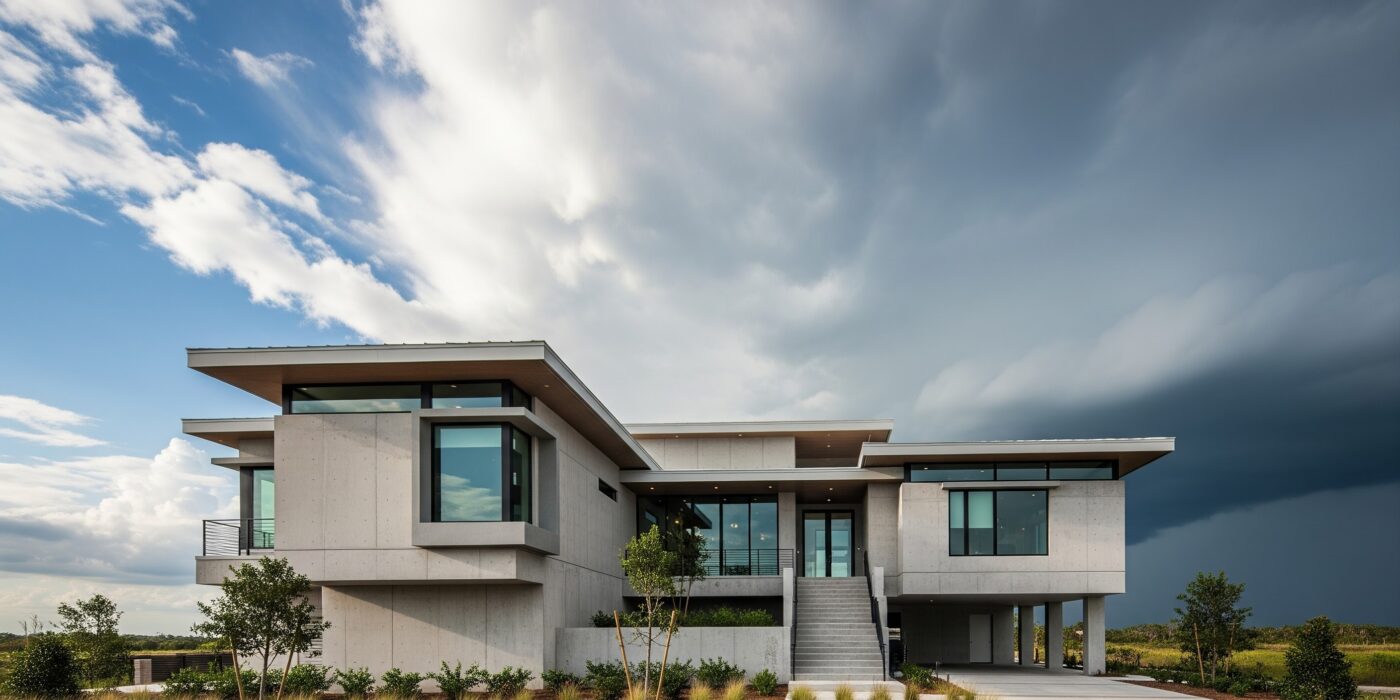
Florida Has Changed — Why the Way Homes Are Built Must Change Too
There’s a question every developer, investor, and landowner in Florida needs to ask right now. Not “where should I build?” or “what’s the market doing?” The question is this: Is the way we’re building still fit for the world Florida has become? The honest answer is no. And the data makes that increasingly hard to ignore.
Florida Isn’t the Same Market It Was Five Years Ago
The pandemic-era story was simple: people were flooding into Florida, prices were rising, and virtually anything built sold. Developers and investors could absorb inefficiencies because demand covered the margin of error. That window has closed.
Today’s Florida market is defined by a different set of forces — ones that don’t reward business as usual. Naples posted the largest home price decline in the entire United States in 2025. Tampa and Miami followed close behind. Condo values statewide dropped more than 10% over the past year, described by analysts as the worst performance since the 2008 financial crisis. This isn’t a temporary correction. It’s a structural reset.
And it’s being driven by three compounding pressures that aren’t going away.
Pressure #1: Insurance Has Become a Construction Problem
Florida’s insurance crisis is no longer just a financial inconvenience for homeowners. It has become a direct filter on which properties can sell, which projects can finance, and which buildings hold their value. Nearly half of all real estate agents in Florida now report insurance issues actively derailing transactions. Buyers are walking away — not because they can’t afford the mortgage, but because they can’t secure coverage at a number that makes ownership viable.
Here’s what’s changed: insurance underwriters are no longer just pricing risk after a building is complete. They’re evaluating construction methodology from the ground up. Concrete and steel construction qualifies for significantly lower premiums. Impact-resistant openings are no longer an upgrade — they’re a prerequisite for a competitive buyer pool. Wind mitigation certifications are shaping purchase decisions before a single showing is scheduled.
The market has made its position clear: homes built without storm protection are being filtered out of buyer searches before the first showing. Properties lacking impact windows and reinforced roof-to-wall connections face a dramatically smaller buyer pool. The premium gap between insurable and uninsurable properties is widening every quarter. Construction method is now an insurance decision. Builders who haven’t internalized that are building into a shrinking market.
Pressure #2: Storms Have Changed the Psychology of Ownership
Southwest Florida is living through something that goes beyond financial calculation. It’s exhaustion. The region absorbed Hurricane Ian in 2022, then watched the rebuilding process grind through delays, cost overruns, and contractor shortages. Before that recovery was complete, additional storms arrived. The cycle — damage, assessment, repair, repeat — has broken the patience and the finances of a generation of homeowners.
Lee County currently carries more than 13 months of housing inventory. Collier County’s median price led the nation in annual decline. These aren’t random statistics. They’re the output of a market where sellers are motivated by something more than money — they’re motivated by the desire to exit a system that has failed them.
But there’s an important signal inside that distress. The buyers entering these markets right now are not buying blind. They are the most structurally literate buyer cohort Florida has ever seen. They are asking specific questions about construction materials, foundation elevation, roof connection engineering, and build quality before they ask about countertops or square footage. They’ve watched their neighbors rebuild twice. They are not doing that.
For developers and builders, this represents a fundamental repositioning opportunity. The buyer coming into the Florida market in 2026 isn’t looking for a house. They’re looking for a building system they can trust.
Pressure #3: The Traditional Build Model Can’t Deliver What the Market Needs
Here’s where the conversation moves from market analysis to structural critique. Traditional construction in Florida — site-built, trade-sequenced, weather-dependent — was designed for a different era. It was built around an assumption of stable labor markets, predictable material costs, and buyers willing to absorb 12 to 18-month timelines. None of those assumptions hold today.
Labor shortages continue to push subcontractor timelines. Material price volatility makes fixed-cost bids nearly impossible to honor. Weather delays compound on projects that can least afford them. The result is a delivery model that consistently underperforms on the three metrics that matter most to every serious buyer and investor in this market: timeline, budget, and quality consistency.
The data from master-planned communities tells a different story. Florida’s top-performing MPCs — Lakewood Ranch, Babcock Ranch, Wellen Park — are outperforming the broader market by a significant margin. What do they share? Integrated systems, predictable delivery, and a construction model built around repeatability. Babcock Ranch didn’t survive back-to-back hurricanes by accident. It was engineered to. That resilience has become one of its most powerful marketing assets — because the market now rewards it.
What Has to Change
The Florida housing market is not asking builders to do more of what they’ve always done. It’s asking for something fundamentally different.
Specifically:
- Construction methods that earn insurance discounts, not just meet minimum code;
- Build systems that compress timelines without sacrificing structural integrity;
- Materials and engineering designed for Florida’s actual climate risk, not theoretical averages;
- Repeatable, scalable delivery models that give developers and investors cost certainty before a shovel hits the ground;
- Transparency in process — buyers, lenders, and municipalities are all demanding it.
The developers who will define the next cycle of Florida housing are not the ones who build the most. They’re the ones who build the most intelligently — with systems that are designed for the environment, the insurance market, and the buyer psychology of 2026 and beyond.
The Window Is Open — But It Won’t Stay Open
Florida is still a growth market. The fundamentals haven’t disappeared. The state still attracts more than 300,000 new residents annually. The demand for quality housing at every price point remains real. But the margin for error has compressed dramatically.
Builders and developers who continue to rely on traditional methods — fragmented subcontractor models, site-built systems that weren’t designed with insurance performance in mind, timelines that assume everything will go smoothly — are operating on borrowed time in a market that has moved on.
The question was never whether Florida would change. The question is whether the way we build changes with it.
How is your team rethinking construction methodology for the Florida market in 2026? Drop a comment below or send a direct message — we’re having this conversation with developers and investors across the state and the insights are worth sharing.
#FloridaRealEstate #HousingInnovation #Constructonik #ResidentialDevelopment #ConstructionTechnology #FloridaDevelopment #ModernConstruction #HousingMarket