
Constructonik

What “Hurricane-Ready” Actually Means in Modern Florida Construction?

What “Hurricane-Ready” Actually Means in Modern Florida Construction

Every builder in Florida says their homes are built to withstand hurricanes.

It’s on the websites. It’s in the sales presentations. It’s the answer every prospect gets when they ask the question directly.

But when the storm makes landfall — when the wind load is real and the rain is horizontal and the pressure differential is testing every connection in the building — marketing language doesn’t hold anything together.

Engineering does.

The Problem With “Hurricane-Ready” as a Marketing Claim

Florida’s building code is among the most stringent in the country. That’s not in dispute. The post-Andrew reforms of the 1990s and the post-Charley, Frances, Ivan, and Jeanne cycle of 2004 produced a regulatory framework that genuinely raised the floor on residential construction quality.

But here’s what the floor actually means: it’s the minimum acceptable standard for a building permit, not a performance guarantee in a major storm event.

A home built to Florida minimum code will, in most cases, survive a Category 3 storm without catastrophic structural failure. That is a meaningful baseline. It is not, however, what a buyer asking about hurricane resistance is actually asking about.

What they’re asking — particularly buyers who have watched Southwest Florida absorb Hurricane Ian, who have seen the images from Lee County, who have friends and colleagues who lost homes they were told were hurricane-ready — is something more specific:

Will this building perform? Not just survive. Perform.

The gap between surviving and performing is where the real conversation about modern Florida construction begins.

What Minimum Code Actually Covers — And What It Doesn’t

To understand what hurricane-ready should mean, it’s worth being precise about what current Florida building code actually requires and where its limitations lie.

Florida’s High Velocity Hurricane Zone requirements — applied to Miami-Dade and Broward counties — represent the most demanding residential code in the United States. The Florida Building Code Wind Speed maps designate design wind speeds by geography, and construction in most coastal and near-coastal areas must meet 130 to 160 mph design standards.

What that means in practice:

  • Structural framing must be engineered to resist calculated wind loads
  • Roof assemblies must use specific fastening patterns and sheathing specifications
  • Openings must be protected or use impact-resistant glazing in designated zones
  • Roof-to-wall connections must meet minimum uplift resistance requirements

What that doesn’t guarantee:

  • That the home will sustain no damage in a major storm
  • That the roof system won’t experience partial failure under sustained Category 4 or 5 conditions
  • That water intrusion won’t occur through code-compliant but imperfect envelope assemblies
  • That the accumulated effect of wind, rain, and pressure over a multi-hour storm event won’t compromise systems that passed inspection individually

Minimum code is a threshold. It is not a performance standard. And in a state where the question is no longer whether a major hurricane will arrive but when, the distinction matters enormously.

The Five Elements of Genuine Structural Resilience

A building that is genuinely engineered for Florida’s hurricane environment — not just code-compliant, but performance-designed — looks different across five specific dimensions.

  1. The Structural System

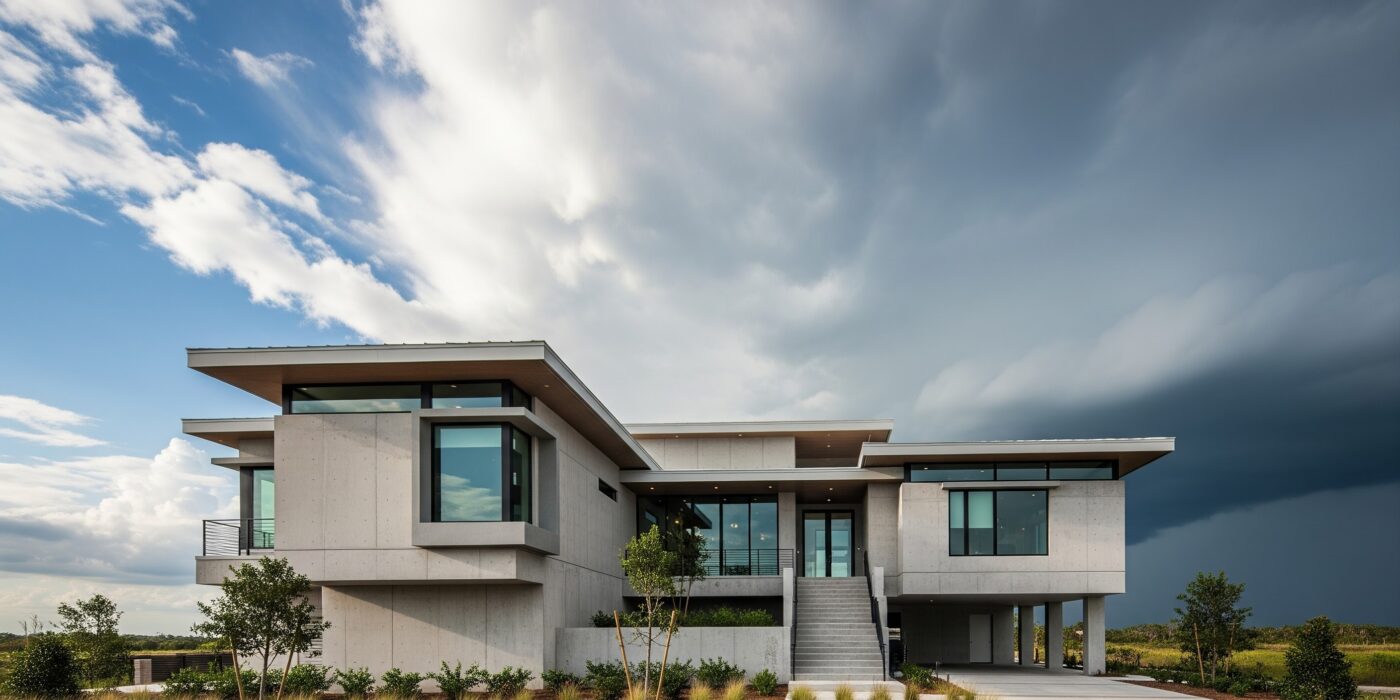
The most foundational decision in hurricane-resilient construction is the primary structural material. Concrete and steel construction outperforms wood-frame in hurricane conditions not because of code requirements but because of physics.

Concrete doesn’t fail progressively the way wood-frame does. It doesn’t absorb moisture that compromises structural integrity over time. It doesn’t create the combustion risk that makes post-storm fires such a significant secondary hazard. And in a wind event, mass matters — the inertia of a concrete structural system resists the racking forces that cause wood-frame buildings to deform under sustained load.

Reinforced concrete and structural steel aren’t premium upgrades in Florida’s climate. They are the rational material choice for a building system designed to perform in the environment it actually occupies.

  1. The Continuous Load Path

This is where most conversations about hurricane resistance stop being general and start being specific — and it’s where real engineering separates from marketing language.

A continuous load path means exactly what it says: the wind forces acting on a building are transferred continuously and without interruption from the roof through the walls through the floor system to the foundation. Every connection in that chain is engineered to handle the load. No weak link.

In a hurricane, the forces acting on a building aren’t static. They are dynamic, directional, and fluctuating. Uplift forces try to separate the roof from the wall. Lateral forces try to rack the wall off the foundation. Internal pressure — driven by any breach in the envelope — amplifies both.

A building with a genuine continuous load path resists all of these forces simultaneously. A building where one connection in the chain is undersized, under-fastened, or improperly detailed will fail at that connection — often catastrophically and suddenly.

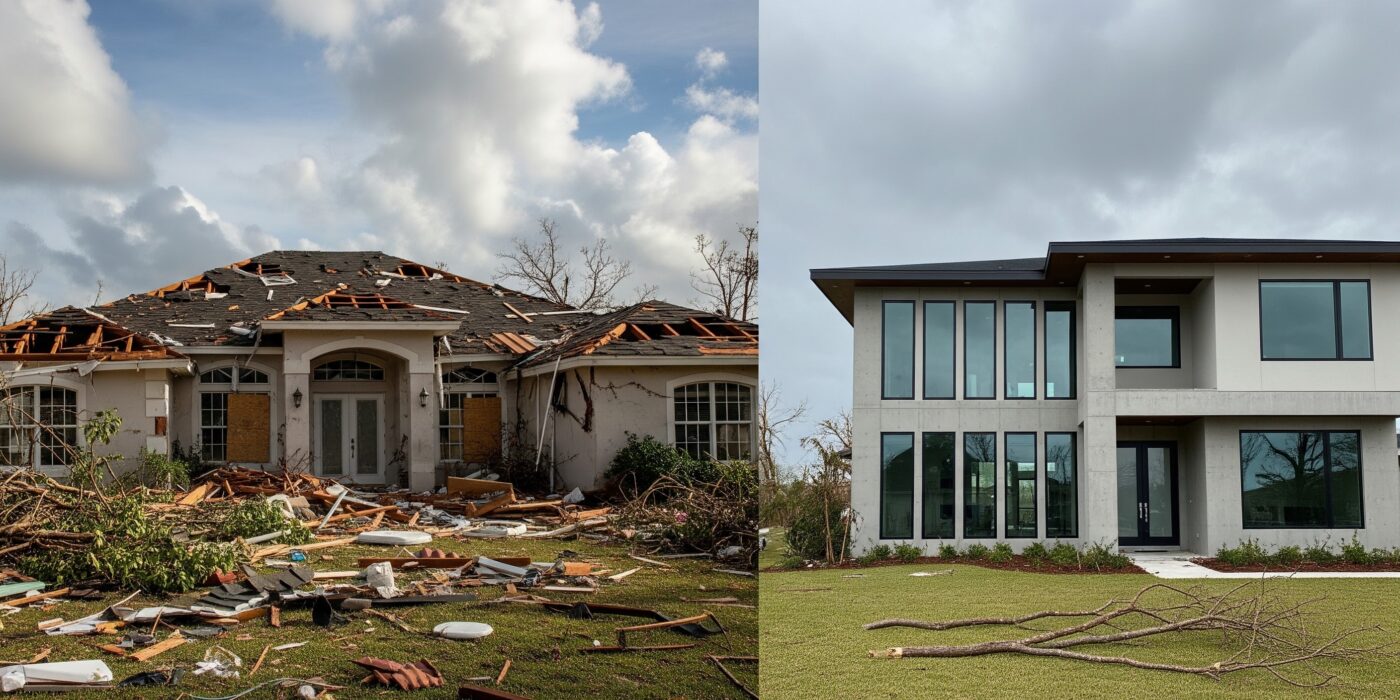
The difference between a home that loses its roof in Ian and one that doesn’t frequently comes down to a single connection detail that was or wasn’t engineered correctly.

  1. The Envelope System

The building envelope — every opening, every joint, every transition between materials — is the hurricane’s primary point of attack.

Impact-resistant windows and doors rated to Florida Product Approval standards aren’t optional features for buyers in Florida’s coastal and near-coastal markets. They are the baseline specification for a building that will maintain envelope integrity in a major storm.

But impact glazing alone isn’t sufficient. The installation — the frame anchoring, the sealant system, the integration with the wall assembly — determines whether the rated performance is actually delivered. A properly rated window installed incorrectly will fail before its rating is reached.

Roof-to-deck connections, ridge cap systems, soffit and fascia detailing — these envelope elements are consistently where water intrusion begins during storm events. A genuinely hurricane-resilient building treats every envelope transition as a potential failure point and engineers accordingly.

  1. The Foundation System

In Florida’s flood-risk environment, foundation design carries two distinct performance requirements: structural resistance to wind-induced uplift and lateral forces, and elevation above base flood levels sufficient to prevent or minimize flood intrusion.

Elevated foundations — pilings or stem walls that position the living space above base flood elevation — don’t just reduce flood damage. They reduce flood insurance premiums, often dramatically. For buyers in AE or VE flood zones, the foundation decision has direct and quantifiable financial implications for the life of ownership.

A building designed for Florida’s actual risk environment treats foundation engineering as a performance specification, not a compliance exercise.

  1. The Mechanical and Systems Integration

The structure can perform perfectly and a building can still be rendered uninhabitable if its mechanical systems aren’t integrated with the same resilience intent.

HVAC systems located in unconditioned attic spaces are vulnerable to roof damage. Electrical panels positioned in flood-prone locations create recovery delays that extend displacement by weeks. Backup power systems — whether generator connections or solar-plus-battery integration — determine whether a home is livable in the days immediately following a storm.

A genuinely hurricane-ready home thinks about the recovery experience, not just the storm survival moment. The goal isn’t just to be standing when the storm passes. It’s to be functional.

Why This Is Now a Baseline Conversation, Not a Premium One

Here’s the market reality that has shifted the entire framing of this conversation.

Florida buyers in 2026 are not asking whether a home is hurricane-resistant as a way to evaluate an upgrade. They’re asking because they understand that a home without genuine resilience engineering is a financial liability — not just a safety concern.

The insurance market has formalized this understanding. Wind mitigation inspections now directly translate construction quality into premium dollars. A home with a documented continuous load path, certified impact openings, and a rated roof-to-wall connection system earns quantifiable premium reductions. A home without those features pays the penalty — indefinitely.

The buyer who has watched neighbors spend eighteen months in temporary housing while their “code-compliant” home was rebuilt is not interested in minimum standards. They are interested in performance.

And the developer or builder who can speak specifically — not in marketing language but in engineering language — about how their building system addresses each of the five dimensions above is speaking the language that this buyer understands and responds to.

The Standard Has Moved

Florida’s hurricane history has been an ongoing education for everyone in the built environment.

Each major storm event has revealed specific failure modes. Each revelation has informed better engineering. The developers and builders who are paying attention to that education — who are treating each storm as a full-scale performance test of construction methodology — are building differently than they were a decade ago.

The ones who aren’t are still using “hurricane-ready” as a marketing claim.

The difference will be apparent the next time a major storm makes landfall in Florida.

It always is.

What specific construction standards are you requiring on your Florida projects right now? Are your buyers asking more sophisticated questions about structural performance than they were two years ago? Drop a comment or send a message — the engineering conversation is becoming the most important one in Florida real estate development.

#FloridaRealEstate #HurricaneReady #Constructonik #StructuralResilience #FloridaDevelopment #ModernConstruction #HousingInnovation #ResilientBuilding
The Real Cost of Owning a Home in Florida Isn’t the Price Tag

The Real Cost of Owning a Home in Florida Isn’t the Price Tag

Most buyers negotiate hard on purchase price.

They spend weeks comparing listings, making offers, pushing back on counteroffers — trying to save $10,000, maybe $20,000 on the contract number.

Then they spend the next ten years paying for a decision they made in an afternoon.

The Number on the Listing Isn’t the Number That Matters

Florida real estate has always attracted buyers who know how to read a market. Investors who understand cap rates. Developers who model IRR before they make an offer. Professionals who have done this before.

And yet, even sophisticated buyers regularly underestimate the true cost of owning a home in Florida — because the purchase price is the most visible number in the transaction, and visibility creates a false sense of importance.

The number that actually determines whether a Florida home is affordable isn’t the price tag.

It’s the total monthly cost of ownership over a 10-year hold.

When you calculate that number honestly — insurance, energy, maintenance, HOA trajectory, and the probability of unplanned repair — the hierarchy of what makes a good Florida real estate decision changes completely.

What Total Cost of Ownership Actually Includes

Let’s be precise about what we’re measuring, because vague financial thinking is how buyers end up underwater on properties that looked affordable at signing.

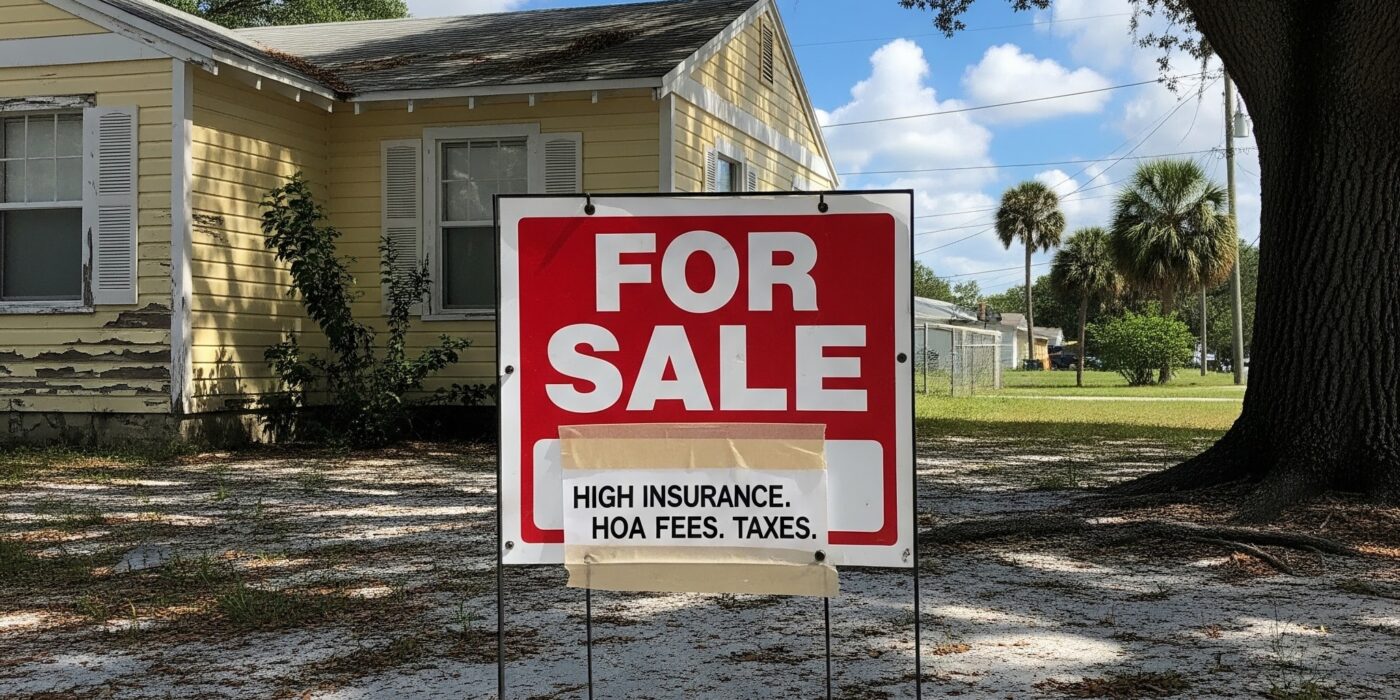
Property insurance: In Florida’s current market, this is no longer a stable, predictable line item. Homeowners in high-risk zones are carrying premiums of $8,000 to $15,000 annually — and those numbers have been moving upward consistently. Escrow payments increased 14% in 2024 alone. A buyer who budgeted $6,000 per year for insurance three years ago may be paying $11,000 today, with no structural reason to expect it to stabilize.

Energy costs: Florida’s utility environment is not forgiving. Air conditioning runs nine to ten months of the year in South and Central Florida. A home with poor insulation, single-pane windows, or an aging HVAC system can carry monthly utility costs of $400 to $600 or more. Over ten years, the gap between an energy-efficient home and an inefficient one can represent $30,000 to $50,000 in cumulative cost.

Maintenance and repair: Conventional site-built construction in Florida carries ongoing maintenance demands that buyers rarely budget for honestly. Roof replacement, exterior paint, wood rot remediation, HVAC servicing, and plumbing degradation are not exceptional events. They are the predictable output of building systems that weren’t designed for Florida’s humidity, heat, and storm exposure. Industry estimates place annual maintenance costs for a conventionally built Florida home at 1% to 2% of home value annually — meaning a $450,000 home should be budgeted at $4,500 to $9,000 per year in maintenance.

HOA and assessment trajectory: For condo owners specifically, this line item has become a financial crisis. Post-Surfside safety mandates have doubled and tripled association fees almost overnight. Special assessments reaching tens of thousands of dollars per unit are forcing owners on fixed incomes to choose between their savings and their homes. The Florida condo market is now described by analysts as the worst performing since the 2008 financial crisis — driven almost entirely by carrying cost escalation, not purchase price.

Storm damage exposure: This is the cost that traditional pro formas almost never include — but that Florida homeowners pay with disturbing regularity. A conventionally built home in Southwest Florida that sustained damage in Hurricane Ian and required partial rebuild is carrying a cost that dwarfs any negotiation savings achieved at contract. That cost isn’t theoretical for thousands of Florida homeowners right now. It’s real, and it arrived without warning.

When you add these figures together, the picture changes substantially.

The Math That Reframes the Conversation

Here’s a direct comparison that illustrates why purchase price is the wrong lens for evaluating Florida real estate.

Home A: $420,000 purchase price. Conventionally built, 2005 construction. Single-pane windows, standard wood-frame construction, no impact protection. Insurance: $11,000 per year. Energy: $550 per month. Maintenance budget: $7,500 per year. No wind mitigation certification.

Home B: $465,000 purchase price. System-built, engineered construction. Concrete structural system, impact openings throughout, wind mitigation certified, high-performance insulation. Insurance: $4,500 per year. Energy: $220 per month. Maintenance budget: $2,800 per year.

Home A costs $45,000 less at purchase.

Over ten years, Home A costs approximately $112,000 more to own.

The cheaper home is the more expensive asset. The math isn’t subtle — it’s decisive. And yet the Florida market continues to price and present homes primarily on the listing number, leaving buyers to discover the real cost of ownership after the contract is signed.

Why This Dynamic Is Particularly Acute Right Now

The total cost of ownership gap between well-built and poorly-built Florida homes has always existed. What’s changed is the magnitude of that gap — and how quickly it’s widening.

Three converging factors are accelerating the divergence:

Insurance repricing is ongoing. Carriers have not finished adjusting their Florida risk models. The stabilization of Citizens Insurance premium growth in 2025 was welcome news, but it doesn’t reverse the multi-year repricing cycle that is still working through the market. Homes without structural resilience features will continue to face premium pressure.

Energy costs are not declining. Florida utility rates have increased consistently, and the performance gap between an energy-efficient building envelope and a conventional one grows more financially significant every year. A home built with structurally insulated panels or insulated concrete forms doesn’t just perform better today — its advantage compounds annually as energy costs rise.

The maintenance gap is becoming visible. Florida’s post-pandemic construction boom produced a significant volume of housing built under cost and labor pressures that compromised quality in ways that are only now becoming apparent. Buyers and investors who purchased conventionally built homes in 2021 and 2022 are beginning to encounter the maintenance consequences of that era. The repair bills are arriving.

What Smart Buyers and Developers Are Calculating Instead

The most sophisticated buyers currently active in the Florida market have moved past purchase price as their primary evaluation metric.

What they’re calculating:

  • Insured cost of ownership — the total monthly outlay including insurance, not just mortgage and taxes
  • Energy performance rating — utility cost projections based on building envelope and mechanical specifications, not assumptions
  • Structural longevity — the expected maintenance and replacement cycle for every major building system
  • Insurance qualification profile — wind mitigation rating, flood zone status, impact protection certification, and the direct premium implications of each
  • Residual value trajectory — how the home’s construction quality positions it in a market where buyers are increasingly filtering by insurability and resilience

This is not overcomplicated analysis. It’s the analysis that every commercial real estate investor applies to every acquisition decision. It’s simply being applied to residential real estate in Florida because the market has made it necessary.

The buyers running this math are making better decisions. They’re also negotiating from a position of genuine understanding — which means they’re identifying value where other buyers see only price, and risk where other buyers see only opportunity.

The Implication for Developers and Builders

If you are developing or building in Florida without modeling total cost of ownership as a core marketing and product development input, you are missing the most compelling value argument available to you right now.

The conversation has shifted. Buyers are no longer simply comparing purchase prices. They are — increasingly — comparing ownership costs. And a home that costs more to buy but dramatically less to own is not a hard sell to a financially literate buyer.

It’s the easiest sell in the market.

The developers who build this case into their sales process — who can present a credible, specific, line-item comparison between their product’s ownership cost and a conventional alternative — are not just differentiating on features. They are differentiating on financial logic.

In a market full of listings competing on price, that is a category-defining advantage.

The Question Worth Asking Before Every Transaction

Before any Florida real estate decision — purchase, development, or investment — one question should precede all others:

What does this actually cost to own?

Not to buy. To own.

The answer to that question is where the real decision lives. And in today’s Florida market, it’s the question that separates buyers who build long-term wealth from those who simply transfer it to someone else.

How are you modeling total cost of ownership in your Florida real estate decisions? Are your buyers asking these questions yet — or are they still negotiating on price? Drop a comment or send a message. The developers having this conversation with their buyers right now are building a significant competitive advantage.

#FloridaRealEstate #TotalCostOfOwnership #Constructonik #RealEstateInvesting #FloridaDevelopment #HousingAffordability #ModernConstruction #SmartBuilding

Why Construction Delays Are Costing Florida Buyers More Than Eve

Why Construction Delays Are Costing Florida Buyers More Than Ever

Most people think the most expensive part of building a home in Florida is the price per square foot.

It isn’t.

It’s the time between breaking ground and moving in — and right now, that time is costing Florida buyers and developers more than most of them have calculated.

The Delay Problem Nobody Prices In

Here’s how the traditional Florida new construction conversation goes: a buyer signs a contract, a developer projects a 12 to 14-month build timeline, and everyone proceeds on the assumption that the schedule is roughly accurate.

It rarely is.

The national average for new residential construction delays has stretched significantly over the past three years. In Florida specifically — where weather windows are unpredictable, labor markets remain tight, and supply chain disruptions haven’t fully resolved — the gap between projected and actual completion dates has become one of the most significant financial risks in any new development transaction.

What makes this particularly damaging right now is the environment in which those delays are occurring.

This isn’t 2021, where rising prices meant that a delayed project was often worth more by the time it completed. In today’s Florida market, time is working against buyers and developers alike — and every month of delay compounds the damage.

What a Delay Actually Costs in 2026

When most buyers think about a construction delay, they think about inconvenience. Extended temporary housing. Disrupted plans. Frustration with a contractor who keeps moving the finish line.

The financial picture is considerably more serious than that.

Consider what a six-month delay actually triggers for a typical Florida buyer or developer:

Carrying costs on capital: Every month a project sits unfinished is a month of interest on construction financing, land holding costs, and any bridge financing in place. At current rates, six months of unnecessary carry on a $600,000 construction loan represents $18,000 to $24,000 in direct cost — before a single finishing decision has been made.

Extended temporary housing: A buyer displaced from their intended move-in date by six months in a Florida rental market that remains expensive is absorbing $2,500 to $5,000 per month in housing costs they hadn’t budgeted for. That’s $15,000 to $30,000 in unplanned expenditure.

Rate lock expiration: Buyers who secured mortgage rate locks at contract are watching them expire during construction delays. In a rate environment where even a 0.25% shift meaningfully alters monthly payments, re-locking at a higher rate after a six-month overrun is a direct, quantifiable financial loss on every payment for the life of the loan.

Market timing risk: In a declining or stabilizing market, a project that was priced correctly at the time of contract may face appraisal challenges by the time it completes. Delays don’t just cost money — they shift the buyer into a different market moment than the one they underwrote.

Add those figures together and a six-month delay on a mid-range Florida new construction project can represent $40,000 to $70,000 in total financial impact. For a luxury or investment-grade project, that number climbs considerably higher.

Why Traditional Construction Keeps Missing the Schedule

Understanding the cost of delays is only useful if you understand why they happen — because the causes aren’t random. They’re structural features of the conventional build model.

Weather dependency: Site-built construction in Florida is fundamentally exposed to weather. A wet season that runs long, a named storm that shuts down a job site for two weeks, or a series of afternoon thunderstorms that consistently interrupt pour schedules — these aren’t exceptions. They’re the calendar. Yet traditional build timelines are routinely projected as though Florida’s weather will cooperate.

Trade sequencing fragility: Conventional construction depends on a choreography of independent subcontractors — framing crews, MEP trades, drywall, finish work — each of whom operates on their own schedule and their own capacity constraints. When one trade runs late, every subsequent trade is delayed. There is no buffer built into the model because the model wasn’t designed with buffers in mind.

Labor market reality: Florida’s construction labor market has not recovered to pre-pandemic depth. Skilled trade availability — particularly framing, electrical, and plumbing — remains constrained in the high-growth corridors where most new development is concentrated. Developers competing for the same subcontractor pools in Sarasota, Manatee, and Charlotte counties are discovering that scheduling promises made at contract signing don’t survive contact with actual availability.

Material procurement fragility: Supply chain disruptions have moderated but not resolved. Long-lead items — windows, HVAC systems, engineered components — continue to carry extended lead times. A single late delivery can idle an entire job site for weeks.

The traditional build model wasn’t designed to be resilient against these pressures. It was designed for a more stable, more predictable operating environment that no longer exists in Florida.

The Market Doesn’t Wait for Delayed Projects

There’s a dimension to construction delays that rarely appears in project pro formas but materially affects outcomes: the market doesn’t pause while a delayed project catches up.

Florida’s top-growth corridors — the Southwest Florida growth corridor, inland Central Florida, Northeast Florida’s master-planned communities — are attracting significant developer competition. Lakewood Ranch, Babcock Ranch, and Wellen Park collectively sold thousands of homes last year, outperforming the broader market not just on volume but on velocity.

What gives integrated, systems-driven communities that velocity advantage? Among other factors: predictable delivery timelines that allow buyers to plan, commit, and close with confidence. When a development can reliably say “your home will be complete in this window,” it commands buyer confidence that a conventional builder running six months late simply cannot.

For investors and developers, the calculus is direct. A build-to-rent project that delivers on schedule generates rental income on schedule. A project that runs six months late delivers six months of vacancy instead. On a 20-unit development, that vacancy cost isn’t theoretical — it’s the difference between a deal that performs and one that doesn’t.

What Construction Certainty Actually Looks Like

The antidote to delay isn’t optimism. It’s system design.

The most significant advances in Florida construction delivery aren’t happening on individual job sites. They’re happening in the methodology — specifically in the shift toward integrated, systems-built approaches that remove the primary variables responsible for delay.

Factory-built components eliminate weather dependency from the most critical build phases. When structural panels are manufactured in a controlled environment and delivered to site ready for assembly, the Florida afternoon thunderstorm becomes irrelevant to the schedule.

Integrated delivery models — where engineering, structural systems, MEP coordination, and finishing operate under a single aligned execution framework rather than a fragmented subcontractor chain — eliminate the trade sequencing fragility that turns one delay into five.

Precision-engineered build systems compress the on-site construction window itself. Projects that traditionally required 12 to 18 months of site activity can be delivered in dramatically shorter timeframes when the structural system is designed for speed without compromising integrity.

Upfront cost certainty removes the financial uncertainty that forces scope and schedule changes mid-project — one of the most common but least discussed causes of delay in conventional builds.

This isn’t theoretical. Modular and systems-built construction is already demonstrating two-week on-site assembly timelines for certain residential typologies in Florida. The technology exists. The methodology is proven. The question is which developers choose to deploy it.

The Risk Is Already on the Clock

Florida buyers and developers who are underwriting new construction projects right now need to be asking a harder question than “what’s the cost per square foot?”

The right question is: what does this project cost if it delivers six months late?

In most cases, the answer to that question should be changing the construction conversation entirely — from which contractor offers the lowest bid to which delivery system offers the highest certainty.

Because in Florida’s current market, the cheapest build isn’t the one with the lowest contract price.

It’s the one that delivers on time.

Are construction timelines factoring into how you’re evaluating new development opportunities in Florida right now? What’s the most significant delay-related cost you’ve encountered on a recent project? Drop a comment or send a message — the shift toward construction certainty is one of the most important conversations happening in Florida development right now.

#FloridaRealEstate #ConstructionDelay #Constructonik #FloridaDevelopment #NewConstruction #HousingInnovation #RealEstateInvesting #ModernConstruction

Why Insurance Is Quietly Deciding Which Homes Florida Buyers Can Afford

hy Insurance Is Quietly Deciding Which Homes Florida Buyers Can Afford

There’s a cost hiding inside every Florida real estate transaction right now.

It’s not the mortgage. It’s not the taxes. It’s not even the price of the home.

It’s insurance — and it’s quietly disqualifying properties, killing deals, and reshaping which homes buyers can actually afford to own.

The Number That’s Rewriting Florida Real Estate

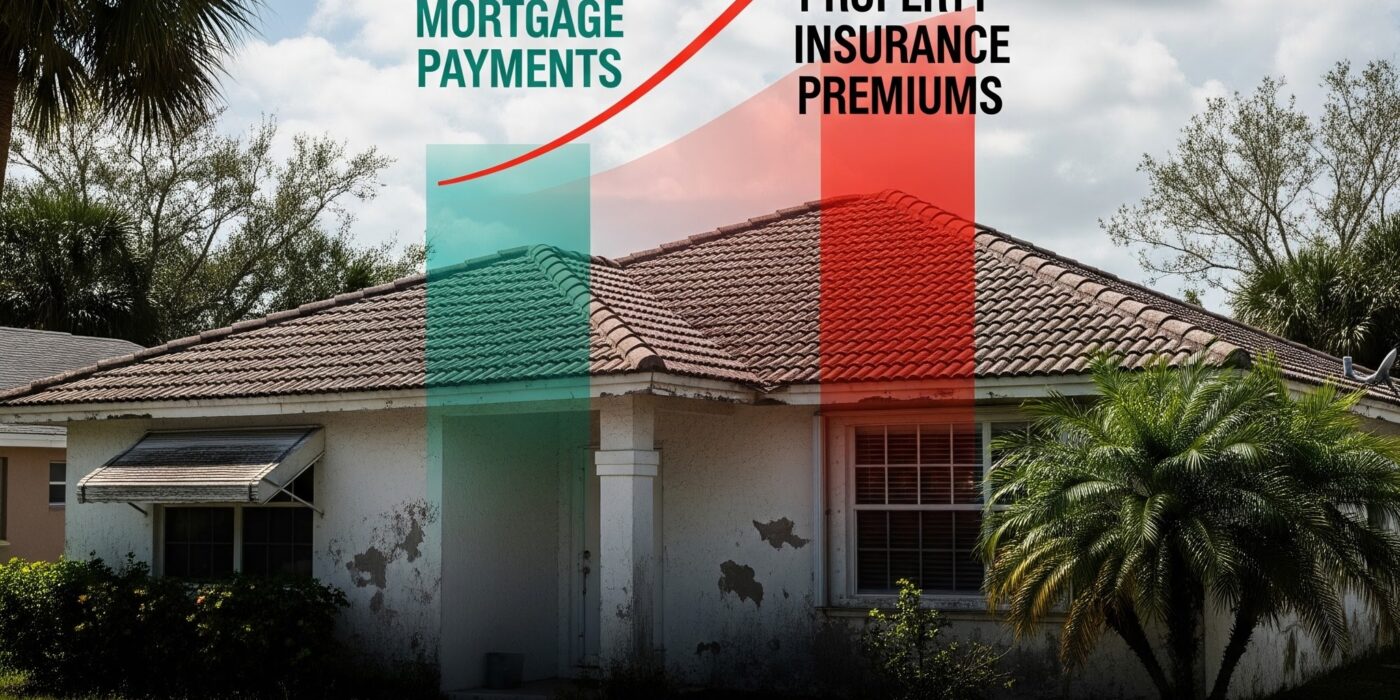
Here’s a sentence that would have been unthinkable a decade ago: in parts of Florida, annual property insurance premiums are now exceeding mortgage payments.

That’s not hyperbole. That’s the lived reality for homeowners in high-risk coastal zones where carriers have either exited the market entirely or repriced coverage to reflect what they now understand about Florida’s climate trajectory.

Nearly half of all real estate agents in Florida report insurance issues actively derailing transactions. Not slowing them down. Derailing them. Deals that survive the inspection, the appraisal, and the financing contingency are collapsing at the closing table because the insurance quote came back at a number the buyer’s monthly budget simply can’t absorb.

The market has quietly reorganized itself around this reality.

And most buyers — and too many builders — haven’t caught up yet.

How Insurance Became the Invisible Gatekeeper

For most of Florida’s modern real estate history, insurance was a line item. Buyers budgeted for it the way they budgeted for HOA fees — an inconvenience, not a deal-breaker.

That changed with a combination of forces that arrived in rapid succession.

First, a wave of major insurers exited the Florida market, leaving Citizens Insurance and a shrinking pool of private carriers to absorb demand they weren’t structured to handle. Then the Surfside collapse in 2021 triggered sweeping condo safety mandates that doubled and tripled association fees overnight — adding an entirely new layer of carrying cost on top of already elevated premiums.

Then came the hurricanes. Ian. Helene. A succession of storms that forced every underwriter still operating in Florida to recalibrate their risk models from scratch.

The result: insurance is no longer priced on historical averages. It’s priced on forward-looking risk — and in Florida, that number keeps moving in one direction.

Escrow payments increased by 14% in 2024 alone, driven almost entirely by insurance cost acceleration. For financed buyers, that increase hit without warning, mid-ownership, in the form of a revised escrow statement.

For many, it was the financial breaking point.

The Pre-Showing Filter Nobody Talks About

Something is happening in Florida buyer behavior that the industry hasn’t fully accounted for yet.

Buyers are filtering properties by insurance viability before they ever schedule a showing.

Experienced agents are now reporting that serious buyers — particularly those who have owned Florida property before — are asking a specific set of questions before they request a tour:

  • Does the home have impact windows and doors on every opening?
  • What is the roof-to-wall connection rating?
  • What flood zone is the property in, and what is the FEMA elevation certificate showing?
  • Has the property filed insurance claims in the past five years?

If the answers don’t hold up, the property doesn’t make the shortlist. Not because the buyer dislikes it, but because they’ve done the math and the insurance cost makes the total ownership equation unworkable.

This is a structural change in how Florida real estate is being evaluated. The premium gap between an insurable property and an uninsurable one isn’t a negotiation point anymore. It’s a market segmentation line.

Properties on the wrong side of that line are sitting. Properties on the right side are moving.

What “Insurable by Design” Actually Means

The phrase sounds like marketing. It’s actually engineering.

A home built with insurance performance in mind looks different from the foundation up:

Structural frame: Concrete and steel construction qualifies for significantly lower wind and fire premiums. Insurers assign direct cost reductions to buildings that won’t fail in a Category 4 event. This isn’t a soft discount — it’s a quantifiable reduction built into the underwriting model.

Openings: Every window, door, and garage entry rated for impact resistance removes a major pricing variable from the insurance equation. Properties without certified impact protection face premiums that can run double those of comparable protected homes.

Roof system: The connection between roof deck and wall structure is one of the most scrutinized elements in any Florida wind mitigation inspection. Modern engineered connections — designed to transfer load continuously to the foundation — translate directly into lower premiums on the wind mitigation report.

Flood elevation: Properties built above base flood elevation, particularly those in X flood zones rather than AE or VE zones, carry dramatically lower NFIP premiums. For buyers in coastal or near-coastal areas, elevation certificate data is now reviewed with the same scrutiny as a home inspection.

Build system: Factory-built and system-built components carry inherent quality consistency advantages. When an underwriter evaluates construction quality, precision-manufactured components carry less uncertainty than site-built assemblies subject to variable labor and weather conditions.

These aren’t luxury features. They are the baseline specifications of a home that can compete in today’s Florida market.

The Cost Math That Changes Everything

Here’s the calculation that sophisticated Florida buyers are running — and that developers need to understand:

A home built to conventional minimum code in a moderate-risk zone might carry an annual insurance premium of $8,000 to $12,000. The same square footage, same location, built with reinforced concrete, impact openings, and a certified wind mitigation profile, might carry a premium of $3,500 to $5,500.

That delta — $4,000 to $6,500 annually — represents $333 to $541 per month in real purchasing power.

At current mortgage rates, that monthly savings translates to approximately $60,000 to $100,000 in additional borrowing capacity for a financed buyer. Put differently, a buyer who can afford a $450,000 mortgage on a conventionally built home could qualify for and afford a $530,000 mortgage on a properly engineered one — because the total monthly cost of ownership is lower.

The more resilient, more expensive-to-build home is actually the more affordable one to own.

This is the argument that reframes the entire conversation about construction cost. The upfront investment in a properly engineered building system isn’t a premium. It’s a financial strategy.

What This Means for Developers and Builders

If you are building in Florida right now without insurance performance as a core design criterion, you are building into a narrowing market.

The buyers who remain active in this environment — cash buyers, international investors, storm-fatigued relocators making deliberate decisions — are among the most informed property buyers in the country. They have been educated by the market itself. They know what they’re looking for, and they know how to calculate what poor construction quality costs them over a ten-year hold.

They are not negotiating on features that protect their insurance position. They are walking away from properties that can’t provide one.

The developers who understand this are treating insurance performance the way the best builders have always treated structural integrity — not as a compliance exercise, but as a competitive advantage baked into every decision from site selection to material specification.

The ones who don’t are going to find that the Florida market has quietly moved on without them.

The Bottom Line

Insurance didn’t used to decide which homes Florida buyers could afford.

It does now.

The question for every developer, builder, and investor operating in this market is simple: are you building homes that work inside today’s insurance reality — or homes that fight against it?

The answer will determine who captures the next cycle of Florida housing demand, and who spends the next three years watching inventory sit.

Are you seeing insurance reshape buyer behavior in your market? What construction decisions are your buyers asking about before anything else? Drop a comment or send a message — these conversations are shaping how the most forward-thinking builders in Florida are positioning right now.

#FloridaRealEstate #HousingAffordability #Constructonik #InsuranceCrisis #ResidentalDevelopment #FloridaDevelopment #ModernConstruction #ResilientHousing

Florida Has Changed — Why the Way Homes Are Built Must Change Too

Florida Has Changed — Why the Way Homes Are Built Must Change Too

There’s a question every developer, investor, and landowner in Florida needs to ask right now. Not “where should I build?” or “what’s the market doing?” The question is this: Is the way we’re building still fit for the world Florida has become? The honest answer is no. And the data makes that increasingly hard to ignore.

Florida Isn’t the Same Market It Was Five Years Ago

The pandemic-era story was simple: people were flooding into Florida, prices were rising, and virtually anything built sold. Developers and investors could absorb inefficiencies because demand covered the margin of error. That window has closed.

Today’s Florida market is defined by a different set of forces — ones that don’t reward business as usual. Naples posted the largest home price decline in the entire United States in 2025. Tampa and Miami followed close behind. Condo values statewide dropped more than 10% over the past year, described by analysts as the worst performance since the 2008 financial crisis. This isn’t a temporary correction. It’s a structural reset.

And it’s being driven by three compounding pressures that aren’t going away.

Pressure #1: Insurance Has Become a Construction Problem

Florida’s insurance crisis is no longer just a financial inconvenience for homeowners. It has become a direct filter on which properties can sell, which projects can finance, and which buildings hold their value. Nearly half of all real estate agents in Florida now report insurance issues actively derailing transactions. Buyers are walking away — not because they can’t afford the mortgage, but because they can’t secure coverage at a number that makes ownership viable.

Here’s what’s changed: insurance underwriters are no longer just pricing risk after a building is complete. They’re evaluating construction methodology from the ground up. Concrete and steel construction qualifies for significantly lower premiums. Impact-resistant openings are no longer an upgrade — they’re a prerequisite for a competitive buyer pool. Wind mitigation certifications are shaping purchase decisions before a single showing is scheduled.

The market has made its position clear: homes built without storm protection are being filtered out of buyer searches before the first showing. Properties lacking impact windows and reinforced roof-to-wall connections face a dramatically smaller buyer pool. The premium gap between insurable and uninsurable properties is widening every quarter. Construction method is now an insurance decision. Builders who haven’t internalized that are building into a shrinking market.

Pressure #2: Storms Have Changed the Psychology of Ownership

Southwest Florida is living through something that goes beyond financial calculation. It’s exhaustion. The region absorbed Hurricane Ian in 2022, then watched the rebuilding process grind through delays, cost overruns, and contractor shortages. Before that recovery was complete, additional storms arrived. The cycle — damage, assessment, repair, repeat — has broken the patience and the finances of a generation of homeowners.

Lee County currently carries more than 13 months of housing inventory. Collier County’s median price led the nation in annual decline. These aren’t random statistics. They’re the output of a market where sellers are motivated by something more than money — they’re motivated by the desire to exit a system that has failed them.

But there’s an important signal inside that distress. The buyers entering these markets right now are not buying blind. They are the most structurally literate buyer cohort Florida has ever seen. They are asking specific questions about construction materials, foundation elevation, roof connection engineering, and build quality before they ask about countertops or square footage. They’ve watched their neighbors rebuild twice. They are not doing that.

For developers and builders, this represents a fundamental repositioning opportunity. The buyer coming into the Florida market in 2026 isn’t looking for a house. They’re looking for a building system they can trust.

Pressure #3: The Traditional Build Model Can’t Deliver What the Market Needs

Here’s where the conversation moves from market analysis to structural critique. Traditional construction in Florida — site-built, trade-sequenced, weather-dependent — was designed for a different era. It was built around an assumption of stable labor markets, predictable material costs, and buyers willing to absorb 12 to 18-month timelines. None of those assumptions hold today.

Labor shortages continue to push subcontractor timelines. Material price volatility makes fixed-cost bids nearly impossible to honor. Weather delays compound on projects that can least afford them. The result is a delivery model that consistently underperforms on the three metrics that matter most to every serious buyer and investor in this market: timeline, budget, and quality consistency.

The data from master-planned communities tells a different story. Florida’s top-performing MPCs — Lakewood Ranch, Babcock Ranch, Wellen Park — are outperforming the broader market by a significant margin. What do they share? Integrated systems, predictable delivery, and a construction model built around repeatability. Babcock Ranch didn’t survive back-to-back hurricanes by accident. It was engineered to. That resilience has become one of its most powerful marketing assets — because the market now rewards it.

What Has to Change

The Florida housing market is not asking builders to do more of what they’ve always done. It’s asking for something fundamentally different.

Specifically:

  • Construction methods that earn insurance discounts, not just meet minimum code;
  • Build systems that compress timelines without sacrificing structural integrity;
  • Materials and engineering designed for Florida’s actual climate risk, not theoretical averages;
  • Repeatable, scalable delivery models that give developers and investors cost certainty before a shovel hits the ground;
  • Transparency in process — buyers, lenders, and municipalities are all demanding it.

The developers who will define the next cycle of Florida housing are not the ones who build the most. They’re the ones who build the most intelligently — with systems that are designed for the environment, the insurance market, and the buyer psychology of 2026 and beyond.

The Window Is Open — But It Won’t Stay Open

Florida is still a growth market. The fundamentals haven’t disappeared. The state still attracts more than 300,000 new residents annually. The demand for quality housing at every price point remains real. But the margin for error has compressed dramatically.

Builders and developers who continue to rely on traditional methods — fragmented subcontractor models, site-built systems that weren’t designed with insurance performance in mind, timelines that assume everything will go smoothly — are operating on borrowed time in a market that has moved on.

The question was never whether Florida would change. The question is whether the way we build changes with it.

How is your team rethinking construction methodology for the Florida market in 2026? Drop a comment below or send a direct message — we’re having this conversation with developers and investors across the state and the insights are worth sharing.

#FloridaRealEstate #HousingInnovation #Constructonik #ResidentialDevelopment #ConstructionTechnology #FloridaDevelopment #ModernConstruction #HousingMarket


Reset password

Enter your email address and we will send you a link to change your password.

Get started with your account

to save your favourite homes and more

Sign up with email

Get started with your account

to save your favourite homes and more

By clicking the «SIGN UP» button you agree to the Terms of Use and Privacy Policy
Powered by Estatik