

Constructonik

The Real Cost of Owning a Home in Florida Isn’t the Price Tag

The Real Cost of Owning a Home in Florida Isn’t the Price Tag

Most buyers negotiate hard on purchase price.

They spend weeks comparing listings, making offers, pushing back on counteroffers — trying to save $10,000, maybe $20,000 on the contract number.

Then they spend the next ten years paying for a decision they made in an afternoon.

The Number on the Listing Isn’t the Number That Matters

Florida real estate has always attracted buyers who know how to read a market. Investors who understand cap rates. Developers who model IRR before they make an offer. Professionals who have done this before.

And yet, even sophisticated buyers regularly underestimate the true cost of owning a home in Florida — because the purchase price is the most visible number in the transaction, and visibility creates a false sense of importance.

The number that actually determines whether a Florida home is affordable isn’t the price tag.

It’s the total monthly cost of ownership over a 10-year hold.

When you calculate that number honestly — insurance, energy, maintenance, HOA trajectory, and the probability of unplanned repair — the hierarchy of what makes a good Florida real estate decision changes completely.

What Total Cost of Ownership Actually Includes

Let’s be precise about what we’re measuring, because vague financial thinking is how buyers end up underwater on properties that looked affordable at signing.

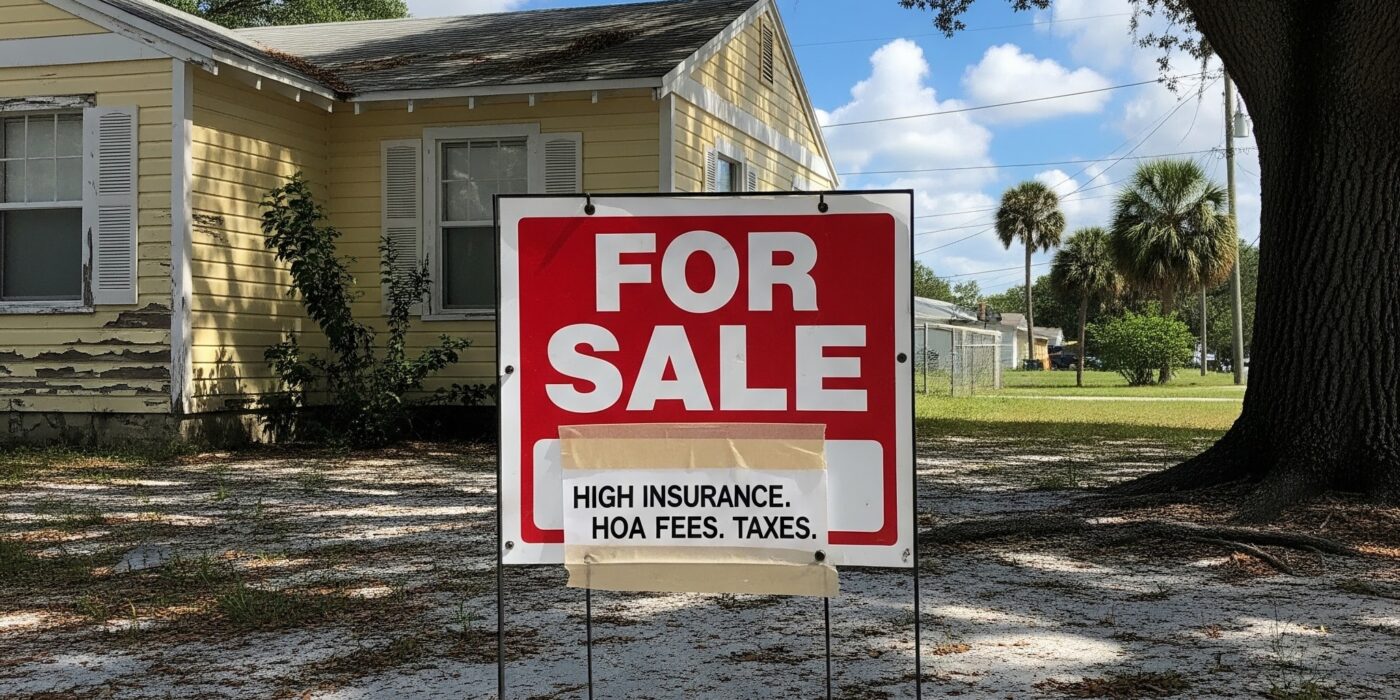
Property insurance: In Florida’s current market, this is no longer a stable, predictable line item. Homeowners in high-risk zones are carrying premiums of $8,000 to $15,000 annually — and those numbers have been moving upward consistently. Escrow payments increased 14% in 2024 alone. A buyer who budgeted $6,000 per year for insurance three years ago may be paying $11,000 today, with no structural reason to expect it to stabilize.

Energy costs: Florida’s utility environment is not forgiving. Air conditioning runs nine to ten months of the year in South and Central Florida. A home with poor insulation, single-pane windows, or an aging HVAC system can carry monthly utility costs of $400 to $600 or more. Over ten years, the gap between an energy-efficient home and an inefficient one can represent $30,000 to $50,000 in cumulative cost.

Maintenance and repair: Conventional site-built construction in Florida carries ongoing maintenance demands that buyers rarely budget for honestly. Roof replacement, exterior paint, wood rot remediation, HVAC servicing, and plumbing degradation are not exceptional events. They are the predictable output of building systems that weren’t designed for Florida’s humidity, heat, and storm exposure. Industry estimates place annual maintenance costs for a conventionally built Florida home at 1% to 2% of home value annually — meaning a $450,000 home should be budgeted at $4,500 to $9,000 per year in maintenance.

HOA and assessment trajectory: For condo owners specifically, this line item has become a financial crisis. Post-Surfside safety mandates have doubled and tripled association fees almost overnight. Special assessments reaching tens of thousands of dollars per unit are forcing owners on fixed incomes to choose between their savings and their homes. The Florida condo market is now described by analysts as the worst performing since the 2008 financial crisis — driven almost entirely by carrying cost escalation, not purchase price.

Storm damage exposure: This is the cost that traditional pro formas almost never include — but that Florida homeowners pay with disturbing regularity. A conventionally built home in Southwest Florida that sustained damage in Hurricane Ian and required partial rebuild is carrying a cost that dwarfs any negotiation savings achieved at contract. That cost isn’t theoretical for thousands of Florida homeowners right now. It’s real, and it arrived without warning.

When you add these figures together, the picture changes substantially.

The Math That Reframes the Conversation

Here’s a direct comparison that illustrates why purchase price is the wrong lens for evaluating Florida real estate.

Home A: $420,000 purchase price. Conventionally built, 2005 construction. Single-pane windows, standard wood-frame construction, no impact protection. Insurance: $11,000 per year. Energy: $550 per month. Maintenance budget: $7,500 per year. No wind mitigation certification.

Home B: $465,000 purchase price. System-built, engineered construction. Concrete structural system, impact openings throughout, wind mitigation certified, high-performance insulation. Insurance: $4,500 per year. Energy: $220 per month. Maintenance budget: $2,800 per year.

Home A costs $45,000 less at purchase.

Over ten years, Home A costs approximately $112,000 more to own.

The cheaper home is the more expensive asset. The math isn’t subtle — it’s decisive. And yet the Florida market continues to price and present homes primarily on the listing number, leaving buyers to discover the real cost of ownership after the contract is signed.

Why This Dynamic Is Particularly Acute Right Now

The total cost of ownership gap between well-built and poorly-built Florida homes has always existed. What’s changed is the magnitude of that gap — and how quickly it’s widening.

Three converging factors are accelerating the divergence:

Insurance repricing is ongoing. Carriers have not finished adjusting their Florida risk models. The stabilization of Citizens Insurance premium growth in 2025 was welcome news, but it doesn’t reverse the multi-year repricing cycle that is still working through the market. Homes without structural resilience features will continue to face premium pressure.

Energy costs are not declining. Florida utility rates have increased consistently, and the performance gap between an energy-efficient building envelope and a conventional one grows more financially significant every year. A home built with structurally insulated panels or insulated concrete forms doesn’t just perform better today — its advantage compounds annually as energy costs rise.

The maintenance gap is becoming visible. Florida’s post-pandemic construction boom produced a significant volume of housing built under cost and labor pressures that compromised quality in ways that are only now becoming apparent. Buyers and investors who purchased conventionally built homes in 2021 and 2022 are beginning to encounter the maintenance consequences of that era. The repair bills are arriving.

What Smart Buyers and Developers Are Calculating Instead

The most sophisticated buyers currently active in the Florida market have moved past purchase price as their primary evaluation metric.

What they’re calculating:

  • Insured cost of ownership — the total monthly outlay including insurance, not just mortgage and taxes
  • Energy performance rating — utility cost projections based on building envelope and mechanical specifications, not assumptions
  • Structural longevity — the expected maintenance and replacement cycle for every major building system
  • Insurance qualification profile — wind mitigation rating, flood zone status, impact protection certification, and the direct premium implications of each
  • Residual value trajectory — how the home’s construction quality positions it in a market where buyers are increasingly filtering by insurability and resilience

This is not overcomplicated analysis. It’s the analysis that every commercial real estate investor applies to every acquisition decision. It’s simply being applied to residential real estate in Florida because the market has made it necessary.

The buyers running this math are making better decisions. They’re also negotiating from a position of genuine understanding — which means they’re identifying value where other buyers see only price, and risk where other buyers see only opportunity.

The Implication for Developers and Builders

If you are developing or building in Florida without modeling total cost of ownership as a core marketing and product development input, you are missing the most compelling value argument available to you right now.

The conversation has shifted. Buyers are no longer simply comparing purchase prices. They are — increasingly — comparing ownership costs. And a home that costs more to buy but dramatically less to own is not a hard sell to a financially literate buyer.

It’s the easiest sell in the market.

The developers who build this case into their sales process — who can present a credible, specific, line-item comparison between their product’s ownership cost and a conventional alternative — are not just differentiating on features. They are differentiating on financial logic.

In a market full of listings competing on price, that is a category-defining advantage.

The Question Worth Asking Before Every Transaction

Before any Florida real estate decision — purchase, development, or investment — one question should precede all others:

What does this actually cost to own?

Not to buy. To own.

The answer to that question is where the real decision lives. And in today’s Florida market, it’s the question that separates buyers who build long-term wealth from those who simply transfer it to someone else.

How are you modeling total cost of ownership in your Florida real estate decisions? Are your buyers asking these questions yet — or are they still negotiating on price? Drop a comment or send a message. The developers having this conversation with their buyers right now are building a significant competitive advantage.

#FloridaRealEstate #TotalCostOfOwnership #Constructonik #RealEstateInvesting #FloridaDevelopment #HousingAffordability #ModernConstruction #SmartBuilding
Why Construction Delays Are Costing Florida Buyers More Than Eve

Why Construction Delays Are Costing Florida Buyers More Than Ever

Most people think the most expensive part of building a home in Florida is the price per square foot.

It isn’t.

It’s the time between breaking ground and moving in — and right now, that time is costing Florida buyers and developers more than most of them have calculated.

The Delay Problem Nobody Prices In

Here’s how the traditional Florida new construction conversation goes: a buyer signs a contract, a developer projects a 12 to 14-month build timeline, and everyone proceeds on the assumption that the schedule is roughly accurate.

It rarely is.

The national average for new residential construction delays has stretched significantly over the past three years. In Florida specifically — where weather windows are unpredictable, labor markets remain tight, and supply chain disruptions haven’t fully resolved — the gap between projected and actual completion dates has become one of the most significant financial risks in any new development transaction.

What makes this particularly damaging right now is the environment in which those delays are occurring.

This isn’t 2021, where rising prices meant that a delayed project was often worth more by the time it completed. In today’s Florida market, time is working against buyers and developers alike — and every month of delay compounds the damage.

What a Delay Actually Costs in 2026

When most buyers think about a construction delay, they think about inconvenience. Extended temporary housing. Disrupted plans. Frustration with a contractor who keeps moving the finish line.

The financial picture is considerably more serious than that.

Consider what a six-month delay actually triggers for a typical Florida buyer or developer:

Carrying costs on capital: Every month a project sits unfinished is a month of interest on construction financing, land holding costs, and any bridge financing in place. At current rates, six months of unnecessary carry on a $600,000 construction loan represents $18,000 to $24,000 in direct cost — before a single finishing decision has been made.

Extended temporary housing: A buyer displaced from their intended move-in date by six months in a Florida rental market that remains expensive is absorbing $2,500 to $5,000 per month in housing costs they hadn’t budgeted for. That’s $15,000 to $30,000 in unplanned expenditure.

Rate lock expiration: Buyers who secured mortgage rate locks at contract are watching them expire during construction delays. In a rate environment where even a 0.25% shift meaningfully alters monthly payments, re-locking at a higher rate after a six-month overrun is a direct, quantifiable financial loss on every payment for the life of the loan.

Market timing risk: In a declining or stabilizing market, a project that was priced correctly at the time of contract may face appraisal challenges by the time it completes. Delays don’t just cost money — they shift the buyer into a different market moment than the one they underwrote.

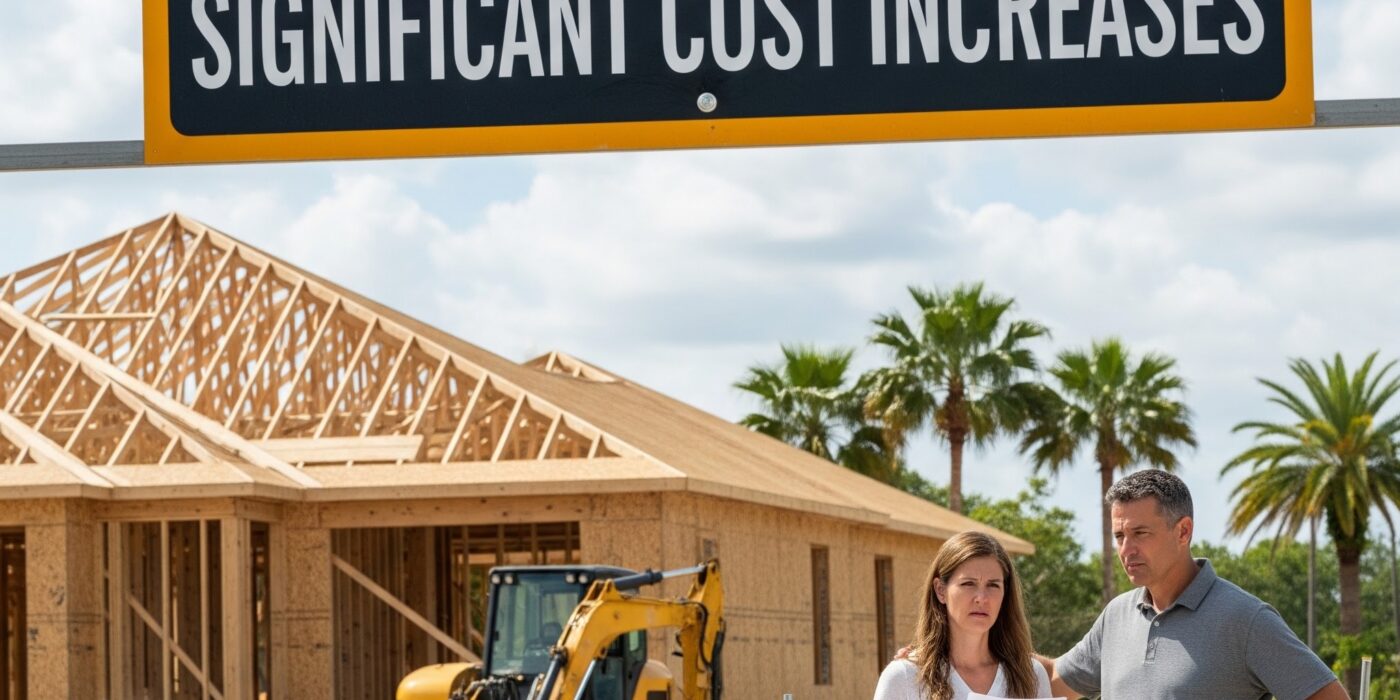
Add those figures together and a six-month delay on a mid-range Florida new construction project can represent $40,000 to $70,000 in total financial impact. For a luxury or investment-grade project, that number climbs considerably higher.

Why Traditional Construction Keeps Missing the Schedule

Understanding the cost of delays is only useful if you understand why they happen — because the causes aren’t random. They’re structural features of the conventional build model.

Weather dependency: Site-built construction in Florida is fundamentally exposed to weather. A wet season that runs long, a named storm that shuts down a job site for two weeks, or a series of afternoon thunderstorms that consistently interrupt pour schedules — these aren’t exceptions. They’re the calendar. Yet traditional build timelines are routinely projected as though Florida’s weather will cooperate.

Trade sequencing fragility: Conventional construction depends on a choreography of independent subcontractors — framing crews, MEP trades, drywall, finish work — each of whom operates on their own schedule and their own capacity constraints. When one trade runs late, every subsequent trade is delayed. There is no buffer built into the model because the model wasn’t designed with buffers in mind.

Labor market reality: Florida’s construction labor market has not recovered to pre-pandemic depth. Skilled trade availability — particularly framing, electrical, and plumbing — remains constrained in the high-growth corridors where most new development is concentrated. Developers competing for the same subcontractor pools in Sarasota, Manatee, and Charlotte counties are discovering that scheduling promises made at contract signing don’t survive contact with actual availability.

Material procurement fragility: Supply chain disruptions have moderated but not resolved. Long-lead items — windows, HVAC systems, engineered components — continue to carry extended lead times. A single late delivery can idle an entire job site for weeks.

The traditional build model wasn’t designed to be resilient against these pressures. It was designed for a more stable, more predictable operating environment that no longer exists in Florida.

The Market Doesn’t Wait for Delayed Projects

There’s a dimension to construction delays that rarely appears in project pro formas but materially affects outcomes: the market doesn’t pause while a delayed project catches up.

Florida’s top-growth corridors — the Southwest Florida growth corridor, inland Central Florida, Northeast Florida’s master-planned communities — are attracting significant developer competition. Lakewood Ranch, Babcock Ranch, and Wellen Park collectively sold thousands of homes last year, outperforming the broader market not just on volume but on velocity.

What gives integrated, systems-driven communities that velocity advantage? Among other factors: predictable delivery timelines that allow buyers to plan, commit, and close with confidence. When a development can reliably say “your home will be complete in this window,” it commands buyer confidence that a conventional builder running six months late simply cannot.

For investors and developers, the calculus is direct. A build-to-rent project that delivers on schedule generates rental income on schedule. A project that runs six months late delivers six months of vacancy instead. On a 20-unit development, that vacancy cost isn’t theoretical — it’s the difference between a deal that performs and one that doesn’t.

What Construction Certainty Actually Looks Like

The antidote to delay isn’t optimism. It’s system design.

The most significant advances in Florida construction delivery aren’t happening on individual job sites. They’re happening in the methodology — specifically in the shift toward integrated, systems-built approaches that remove the primary variables responsible for delay.

Factory-built components eliminate weather dependency from the most critical build phases. When structural panels are manufactured in a controlled environment and delivered to site ready for assembly, the Florida afternoon thunderstorm becomes irrelevant to the schedule.

Integrated delivery models — where engineering, structural systems, MEP coordination, and finishing operate under a single aligned execution framework rather than a fragmented subcontractor chain — eliminate the trade sequencing fragility that turns one delay into five.

Precision-engineered build systems compress the on-site construction window itself. Projects that traditionally required 12 to 18 months of site activity can be delivered in dramatically shorter timeframes when the structural system is designed for speed without compromising integrity.

Upfront cost certainty removes the financial uncertainty that forces scope and schedule changes mid-project — one of the most common but least discussed causes of delay in conventional builds.

This isn’t theoretical. Modular and systems-built construction is already demonstrating two-week on-site assembly timelines for certain residential typologies in Florida. The technology exists. The methodology is proven. The question is which developers choose to deploy it.

The Risk Is Already on the Clock

Florida buyers and developers who are underwriting new construction projects right now need to be asking a harder question than “what’s the cost per square foot?”

The right question is: what does this project cost if it delivers six months late?

In most cases, the answer to that question should be changing the construction conversation entirely — from which contractor offers the lowest bid to which delivery system offers the highest certainty.

Because in Florida’s current market, the cheapest build isn’t the one with the lowest contract price.

It’s the one that delivers on time.

Are construction timelines factoring into how you’re evaluating new development opportunities in Florida right now? What’s the most significant delay-related cost you’ve encountered on a recent project? Drop a comment or send a message — the shift toward construction certainty is one of the most important conversations happening in Florida development right now.

#FloridaRealEstate #ConstructionDelay #Constructonik #FloridaDevelopment #NewConstruction #HousingInnovation #RealEstateInvesting #ModernConstruction

Reset password

Enter your email address and we will send you a link to change your password.

Get started with your account

to save your favourite homes and more

Sign up with email

Get started with your account

to save your favourite homes and more

By clicking the «SIGN UP» button you agree to the Terms of Use and Privacy Policy
Powered by Estatik